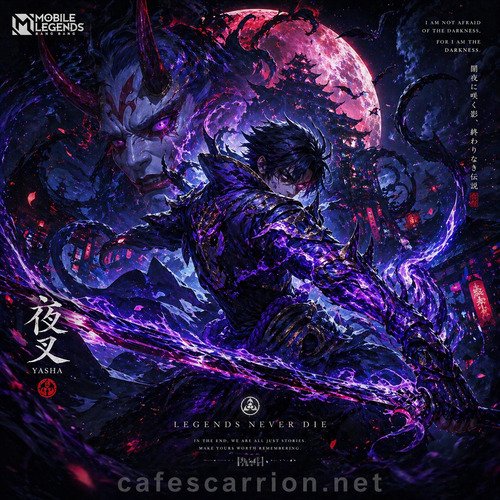
cafescarrion.net – In competitive environments of Mobile Legends: Bang Bang, victory is rarely determined by who has faster fingers or more aggressive instincts alone. Instead, it is shaped by how deeply a player understands hero identity, psychological pressure, map influence, and adaptability under shifting conditions. Every hero in the game is not just a combat unit but a strategic instrument that influences tempo, decision-making, and team structure.
To truly master heroes, players must move beyond surface-level mechanics and start reading the game as a layered system. This includes how heroes think, how they control space, how they respond to objectives, and how they evolve with the meta. The following breakdown explores hero mastery from psychological, strategic, and competitive evolution perspectives, giving a deeper understanding of how high-level gameplay is formed.
Hero Archetypes and Psychological Layers of Gameplay
Every hero carries a psychological identity that influences how both the user and the opponent behave during a match. Understanding these identities allows players to predict enemy actions, manipulate fights, and control tempo without always relying on raw mechanics. This is where hero mastery begins to feel less like execution and more like mind games.
Tank heroes are often misunderstood as purely defensive tools, but their real strength lies in controlled aggression. A tank player dictates when fights begin and how long they last. This responsibility requires a calm mindset, because every initiation carries consequences that affect the entire team.
Instead of seeking kills, tank players focus on creating uncertainty for the enemy. By standing in vision lines, blocking pathways, or threatening engages, they force opponents into uncomfortable positioning. Even without using abilities, their presence shapes movement patterns across the map.
The psychological burden of a tank player is unique. They must constantly evaluate whether their team is ready to follow up, whether enemy cooldowns are available, and whether vision is sufficient. A poorly timed initiation can collapse an entire strategy, while a perfectly timed one can instantly win objectives.
High-level tank play is less about reacting and more about setting expectations. When enemies start respecting your positioning, you have already gained control over the fight before it even begins.
Assassin Mindsets and the Art of Controlled Chaos
Assassins operate in a completely different psychological space. Their gameplay revolves around unpredictability, timing, and isolation of targets. Unlike tanks who control space openly, assassins manipulate fear and uncertainty from the shadows.
A strong assassin player constantly reads enemy hesitation. They look for gaps in formation, delayed rotations, or overextended carries. The goal is not to fight directly but to create chaos that breaks enemy structure.
The most dangerous aspect of assassin gameplay is patience. Many players assume assassins are aggressive by nature, but elite assassin players often wait longer than expected. They study movement patterns before committing, ensuring that every entry has maximum impact.
This role also demands strong emotional control. A failed assassination attempt can quickly shift momentum, so decision-making must be calculated rather than impulsive. When executed properly, assassins force enemies to play defensively, even when no fight is happening.
Support and Roaming Intelligence as a Hidden Win Condition
Support and roaming heroes are often overlooked, yet they are one of the most influential roles in controlling match flow. Their primary strength lies not in damage but in information, timing, and disruption.
A skilled support player constantly tracks enemy rotations and predicts movement paths. This allows them to assist lanes before danger appears, rather than reacting after the fact. In many cases, the support determines whether early skirmishes become favorable or disastrous.
Unlike other roles, supports must think in layers. They are responsible for vision control, lane pressure assistance, and protection of key carries. Every movement must serve multiple purposes at once.
What makes this role psychologically complex is its lack of visible recognition. A well-played support often has fewer kills or flashy moments, but their influence is felt in every successful fight. They are the invisible structure holding the team together.
Map Control, Vision, and Hero-Based Strategic Movement
Beyond individual psychology, hero mastery expands into spatial awareness. The map is not just a battleground but a dynamic system of pressure points. Every hero interacts with it differently, and understanding this interaction is essential for high-level decision-making.
The early game in Mobile Legends: Bang Bang is defined by lane control. Heroes are assigned lanes not just for farming, but for establishing territorial advantage. Every minion wave becomes a tool for controlling space and dictating enemy movement.
Strong laning heroes understand how to manipulate wave timing. By freezing, pushing, or slow-pushing waves, they create opportunities for rotation or deny enemy experience. This subtle control often determines how quickly a team can transition into mid-game dominance.
Each lane serves a different purpose. Side lanes often act as pressure anchors, forcing enemies to respond defensively, while mid lane becomes the rotational hub of the map. Junglers rely heavily on lane stability to create safe gank opportunities.
A player who understands lane control does not simply clear waves—they shape how enemies move across the entire map.
Jungle Control and Resource Denial Strategy
The jungle is the economic engine of the game. Controlling it means controlling both resources and tempo. Jungle heroes are not just damage dealers; they are pace setters who decide when fights occur and where pressure is applied.
Efficient jungle control involves more than farming camps. It includes invading enemy resources, tracking enemy jungle timers, and coordinating with lanes to create numerical advantages. A well-timed invasion can delay enemy power spikes significantly.
Vision plays a critical role in jungle dominance. Without information, even the strongest jungler becomes vulnerable. This is why coordinated teams prioritize map awareness before committing to aggressive rotations.
Jungle control is also deeply tied to psychological pressure. When enemies lose access to resources, they are forced into reactive gameplay, which reduces their ability to dictate fights.
Objective Control and High-Stakes Map Decisions
Objectives such as Turtle and Lord are turning points in every match. These moments force teams into direct confrontation, where positioning and preparation matter more than raw mechanics.
Successful objective control requires setup. Teams must establish vision, clear enemy wards, and position themselves before the objective spawns. Entering fights late often results in losing both the fight and the objective itself.
Heroes with zoning abilities or area control excel in these situations. They can restrict enemy movement, forcing them into unfavorable angles or delaying their approach.
Late-game objective fights are often decided before they even begin. Teams that arrive first, control vision, and maintain formation typically have a significant advantage. This makes objective control one of the most strategic aspects of hero usage.
As players progress into higher levels of play, individual hero mastery becomes insufficient without understanding the evolving meta. The way heroes interact changes over time due to balance updates, new strategies, and shifting player behavior. Adaptability becomes the final layer of mastery.
Drafting Strategy and Counter-Based Hero Selection
Drafting is the first strategic battle in every match of Mobile Legends: Bang Bang. It determines team structure, win conditions, and potential weaknesses before the game even starts.
A strong draft is built on balance and synergy. Teams must ensure they have frontline durability, damage consistency, crowd control, and mobility. Missing one component can make a composition unstable under pressure.
Counterpicking is equally important. Selecting heroes that directly disrupt enemy win conditions can significantly reduce their effectiveness. For example, heroes with strong lockdown abilities can neutralize high-mobility assassins, while burst damage counters sustain-heavy compositions.
Drafting is not just about selecting strong heroes, but about predicting how the match will unfold in later stages. High-level players think several steps ahead, anticipating rotations and item spikes before they happen.
Item Adaptation and Situational Decision-Making
Itemization is one of the most flexible yet underutilized aspects of hero mastery. Many players follow static builds, but competitive gameplay demands constant adjustment based on enemy composition.
Defensive items can transform fragile heroes into survivable threats, while penetration items allow damage dealers to remain effective against tank-heavy teams. Choosing the wrong build path can significantly reduce a hero’s impact.
Understanding itemization requires conceptual thinking rather than memorization. Each item serves a purpose: survival, burst amplification, sustain, or utility. Once players understand these functions, they can adapt dynamically during matches.
Flexible item builds also force enemies to rethink their strategy. A marksman building defensive items earlier than expected can completely alter fight dynamics.
Meta Shifts and Long-Term Hero Evolution
The meta in Mobile Legends is constantly evolving. Changes in balance, new hero releases, and shifts in player strategy continuously reshape which heroes are dominant.
A hero that is weak in one patch may become overpowered in another due to indirect buffs or synergy changes. This is why adaptability is more important than loyalty to specific heroes.
High-level players study these shifts closely. They do not just learn heroes—they learn how heroes fit into evolving systems. This allows them to transition smoothly between metas without losing effectiveness.
Competitive evolution also includes understanding how roles shift over time. Sometimes tanks become more aggressive, assassins become utility-based, or mages transition into support roles depending on the meta environment.
Conclusion Beyond Mechanics: Understanding Hero Mastery and Strategic Depth in Mobile Legends
Hero mastery in Mobile Legends: Bang Bang is a layered discipline that goes far beyond mechanics. It begins with understanding psychological archetypes, expands into map control and resource management, and ultimately culminates in adaptation to meta shifts and drafting intelligence.
Players who truly excel are those who recognize that every hero carries both mechanical and strategic depth. Tanks control tempo through presence, assassins manipulate chaos through timing, and supports shape outcomes through information and control. Meanwhile, map awareness, objective planning, and drafting decisions determine how these roles interact within the broader structure of the game.
At its highest level, the game becomes less about individual performance and more about interpretation—reading situations, predicting outcomes, and adjusting in real time. Mastery is not a destination but a continuous process of adaptation, awareness, and refinement.