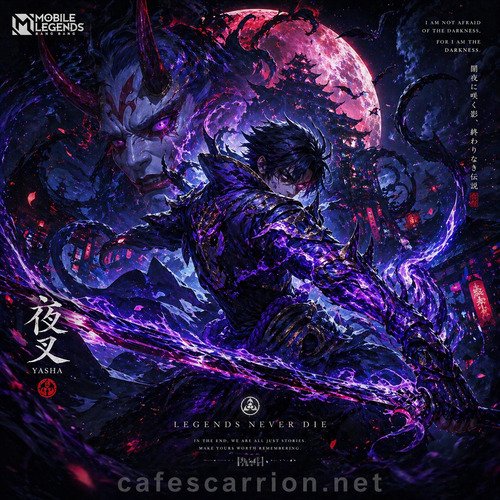
cafescarrion.net – Mobile Legends: Bang Bang is not just a game about picking strong heroes and jumping into battle. It is a layered competitive experience where understanding hero roles, map pressure, timing, and decision-making determines whether you dominate or get overwhelmed. Every hero in the game has a purpose, and learning how to use them effectively requires more than mechanical skill—it demands awareness, adaptability, and strategic thinking. This guide breaks down how heroes function in real matches and how you can elevate your gameplay by understanding their deeper roles and interactions.
Understanding Hero Roles and Core Mechanics
Every match in Mobile Legends begins with hero selection, and this stage already shapes the flow of the entire game. Heroes are not isolated power units; they exist within a system of roles that complement or counter each other. Understanding these roles helps you anticipate what your team needs and what your opponents are trying to achieve.
Tanks are the backbone of any balanced team composition. Their primary responsibility is to absorb damage, initiate fights, and create space for damage dealers to operate safely. A strong tank does not simply charge into battle blindly; instead, they carefully time their entry to disrupt enemy formations at the exact moment it matters most. Heroes like Tigreal or Khufra excel at initiating team fights because they can force enemies into unfavorable positions.
What separates a good tank from a great one is decision-making. A great tank constantly reads the battlefield, tracks enemy cooldowns, and understands when to engage or retreat. In many situations, the tank’s presence alone is enough to control enemy movement, even without using abilities. This psychological pressure is often underestimated but plays a huge role in high-level matches. By standing at key choke points, zoning enemies away from objectives, and protecting vulnerable teammates, tanks define the rhythm of the game.
Damage Dealers: Marksman and Assassin Dynamics
Damage dealers are the primary win condition for most teams. Marksmen provide sustained damage in late game fights, while assassins offer burst potential to eliminate high-value targets quickly. The difference between these two categories lies in their approach to combat. Marksmen like Layla or Claude rely on positioning and consistent output, while assassins such as Lancelot or Hayabusa depend on timing and precision.
A marksman’s effectiveness is directly tied to their positioning. Even the strongest marksman becomes useless if caught out of position. This is why protecting them is often the team’s highest priority during fights. On the other hand, assassins thrive on chaos. They wait for the right moment when enemy cooldowns are spent or when positioning mistakes occur. Their role is not to start fights but to finish them by eliminating critical targets such as enemy marksmen or mages.
Understanding how these two roles interact is essential. A well-played assassin creates space for the team by removing threats, while a marksman capitalizes on that space by dealing continuous damage over time. When both roles function correctly, they form the core damage engine of a winning team.
Mages and Utility Burst Control
Mages occupy a unique space in Mobile Legends because they combine damage with utility. Some mages specialize in burst damage, capable of eliminating squishy targets instantly, while others focus on crowd control and zoning. Heroes like Eudora deliver devastating burst combos, while others like Kagura provide mobility and battlefield manipulation.
What makes mages especially valuable is their ability to influence fights without committing deeply. They can poke enemies from a safe distance, control choke points, and force opponents to reposition constantly. In team fights, a well-timed mage ultimate can completely change the outcome, especially when multiple enemies are caught in crowd control effects.
Mages also play a key role in controlling the tempo of the game. By clearing waves quickly, they enable rotations and help secure objectives like Turtle and Lord. Their impact is not always flashy, but it is consistently influential throughout every phase of the match.
Strategic Gameplay and Map Awareness
Winning in Mobile Legends is not only about individual skill but also about understanding how the map evolves over time. Every decision, from lane assignments to rotations, affects how much control your team has over objectives and enemy movements.
The laning phase is where the foundation of the game is built. Each player is assigned a lane based on their hero’s strengths and weaknesses. During this phase, the main focus is not only to secure gold and experience but also to maintain pressure without overextending.
Strong laning requires understanding wave management. Pushing too aggressively without vision can lead to ganks, while playing too passively can result in losing control of the lane entirely. Good players constantly balance aggression with safety, using bushes and map awareness to avoid unnecessary deaths.
Another key aspect of laning is trading effectively. Instead of mindlessly attacking opponents, skilled players look for favorable exchanges where they deal more damage than they receive. This often involves understanding cooldowns and exploiting moments when the enemy has used key abilities. Over time, winning small trades leads to larger advantages such as turret pressure or forced recalls.
Rotations and Objective Control
As the game progresses, lanes begin to merge into a more dynamic battlefield where rotations become crucial. Rotating means leaving your assigned lane to support other parts of the map. Successful rotations often lead to kills, turret destruction, or objective control.
The key to effective rotation is timing. Moving too early can result in losing farm, while rotating too late may cause missed opportunities. High-level players constantly scan the minimap to identify when enemies are out of position or when teammates need support. This awareness allows them to respond quickly and efficiently.
Objectives like Turtle and Lord are central to winning games. Securing these objectives provides gold, buffs, and map pressure. However, simply showing up is not enough. Teams must position properly, control vision, and force favorable engagements before committing. A poorly executed objective fight can easily swing the momentum in favor of the enemy.
Teamfight Positioning and Timing
Teamfights are where most matches are decided, and positioning is often the difference between victory and defeat. Each hero has a specific role in a fight, and understanding where to stand is essential.
Frontliners should always be at the edge of engagement, absorbing damage and disrupting enemy formation. Damage dealers must stay at a safe distance, constantly repositioning to avoid being targeted. Supports and mages need to find angles where they can use their abilities effectively without exposing themselves.
Timing is equally important. Engaging too early can lead to isolation and defeat, while engaging too late can result in missed opportunities. The best teams synchronize their actions, waiting for key cooldowns to be used before committing to a full fight. This level of coordination is what separates casual play from competitive performance.
Once players understand the basics, the next step is mastering heroes at a deeper level. This involves mechanical precision, intelligent itemization, and the ability to adapt to changing game metas.
Skill Combos and Mechanical Execution
Every hero in Mobile Legends has unique skill combinations that maximize their effectiveness. Learning these combos is essential for optimizing damage output and survival. For example, assassins often rely on fast sequences of abilities and basic attacks to eliminate targets before they can react.
Mechanical execution is not just about speed but also consistency. A player who can reliably land skill shots or execute combos under pressure becomes significantly more valuable. This is especially important in high-rank matches where opponents actively try to dodge abilities and punish mistakes.
Practicing combos in controlled environments helps build muscle memory, allowing players to focus more on decision-making during real matches. Over time, this leads to smoother gameplay and more confident engagements.
Item Builds and Situational Adjustments
Itemization is one of the most underrated aspects of gameplay. The same hero can perform very differently depending on the items chosen. While default builds provide a starting point, experienced players adjust their items based on enemy composition.
For example, if the enemy has high physical damage, defensive armor items become a priority. If they rely heavily on healing, anti-heal items are necessary. Understanding when to deviate from standard builds is a sign of advanced game knowledge.
Flexibility in itemization also allows players to adapt mid-game. Instead of committing to a fixed build, they respond dynamically to the evolving situation. This adaptability often determines whether a player can carry or becomes irrelevant in late-game fights.
Adapting to Meta and Enemy Drafts
The meta in Mobile Legends is constantly evolving due to balance changes and new hero releases. Staying updated with these changes is crucial for maintaining competitive performance. Some heroes become stronger due to buffs, while others fall out of favor due to nerfs or shifts in strategy.
Understanding enemy drafts is equally important. Picking a hero is not just about personal preference but also about countering the opposing team. A well-balanced draft can neutralize enemy strengths and amplify your own advantages.
Adaptation also extends to in-game decisions. Even if a hero is not currently meta, a skilled player can still make them effective through smart positioning, teamwork, and strategy. This highlights the importance of understanding fundamentals rather than relying solely on tier lists.
Conclusion Mastering Heroes in Mobile Legends: A Complete Guide to Roles, Strategy, and Gameplay Control
Mastering heroes in Mobile Legends is a journey that goes far beyond simply learning abilities or memorizing builds. It requires a deep understanding of roles, map awareness, timing, and adaptability. Each hero contributes differently to the game, and success depends on how well you integrate these contributions into a unified strategy.
Whether you are playing tanks that control the frontline, damage dealers that define fights, or mages that shape the battlefield from a distance, your impact is determined by your decisions as much as your mechanics. As you refine your skills, focus not only on individual performance but also on how you influence the overall flow of the match.
In the end, Mobile Legends is a game of coordination and awareness. The more you understand your heroes and their place in the larger system, the closer you get to consistently controlling matches and leading your team to victory.