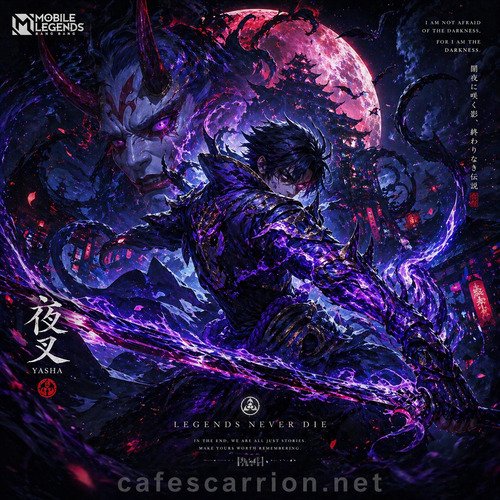
cafescarrion.net – Mobile Legends has become more than just a mobile game for millions of players around the world. It is a competitive arena where quick thinking, teamwork, mechanical skill, and emotional control collide in a fast-paced battle that rarely gives players time to breathe. Every match creates a different story. Sometimes the game rewards patience and coordination, while at other times it punishes even the smallest mistake. This unpredictability is one of the reasons why the game remains addictive and endlessly replayable.
For beginners, Mobile Legends may appear simple at first glance. Two teams enter a battlefield, destroy towers, defeat enemies, and eventually push toward the enemy base. Yet after spending more time in ranked matches, players begin to realize that the game contains layers of strategy hidden beneath its colorful interface. Positioning, timing, hero drafting, objective control, map awareness, and communication all shape the outcome of a match far more than raw aggression alone.
Many players believe victory comes from having the strongest hero or the highest damage output. In reality, the game often rewards those who understand tempo and discipline. A player who knows when to retreat can sometimes contribute more than a player who constantly hunts for kills. Mobile Legends is not only about fighting well; it is also about understanding the flow of the battlefield and adapting to situations that change every minute.
Learning the Foundations of Gameplay
Before players can dominate ranked matches consistently, they need to understand the core systems that define the game. Strong mechanics are important, but a stable foundation matters even more because it shapes how players react under pressure.
One of the biggest mistakes new players make is ignoring team composition. Many players choose heroes purely based on personal preference without considering whether the team already lacks durability, crowd control, or late-game damage. A balanced lineup is often the first step toward victory.
The Tank usually acts as the frontline. This role absorbs damage, opens fights, and protects fragile teammates. Tanks are not always flashy, but they often determine whether a teamfight begins successfully or ends in disaster. Good Tank players understand positioning better than most roles because they must constantly judge whether their teammates are ready to engage.
Fighters operate in a flexible space between offense and defense. They can survive longer than assassins while still dealing meaningful damage. In many situations, Fighters become the bridge between the frontline and the backline, creating pressure without immediately collapsing under enemy attacks.
Marksmen are generally the main source of sustained damage during the late game. Their power grows over time, which means early survival becomes extremely important. A Marksman who farms efficiently can completely change the direction of a match after acquiring several core items. However, poor positioning often causes this role to disappear instantly during teamfights.
Mages specialize in magical burst damage and crowd control. Some excel at zoning enemies, while others focus on deleting priority targets within seconds. A skilled Mage understands timing because using abilities too early or too late can ruin an entire team engagement.
Assassins rely heavily on precision and speed. Unlike Tanks or Fighters, Assassins cannot afford prolonged mistakes. Their role revolves around eliminating vulnerable enemies quickly before escaping danger. Successful Assassin players often possess exceptional map awareness because they constantly search for opportunities across the battlefield.
Supports, meanwhile, provide utility that strengthens the entire team. Healing, shields, movement buffs, and crowd control can completely reshape teamfights. Although Support players may not always appear at the top of the scoreboard, their influence frequently determines whether teammates survive critical moments.
A team with balanced roles generally performs better because every player contributes to a larger strategic structure rather than pursuing isolated battles.
The Importance of Farming and Gold Efficiency
Many inexperienced players focus too heavily on kills while ignoring resource management. In Mobile Legends, gold and experience are often more valuable than temporary excitement from random fights.
Efficient farming allows heroes to reach important power spikes faster. Clearing minion waves, securing jungle monsters, and taking objectives all contribute to economic advantage. A player who understands resource efficiency can become significantly stronger even without collecting many kills.
This is especially important for late-game heroes. Marksmen and certain Mages require several items before reaching their full potential. Falling behind in gold can delay those power spikes and leave the team vulnerable during mid-game engagements.
Good farming also involves understanding lane management. Players should avoid wasting time wandering aimlessly around the map. Every second matters because efficient movement creates long-term advantages. High-level players rarely remain inactive. They constantly rotate between clearing waves, securing jungle camps, and preparing for objectives.
Another overlooked aspect is denying enemy resources. Pressuring opponents away from minion waves or stealing jungle monsters weakens the enemy economy while strengthening your own team simultaneously. This double advantage often snowballs into tower pressure and map control.
The strongest players do not simply fight more; they maximize efficiency during every stage of the game.
Developing Map Awareness and Positioning
Mechanical skill alone cannot compensate for poor awareness. Many players lose matches not because they lack damage, but because they repeatedly place themselves in dangerous situations.
Map awareness begins with regularly checking the minimap. This simple habit provides enormous information about enemy movement, missing heroes, and potential ambushes. Skilled players glance at the minimap constantly while continuing to control their hero smoothly.
Understanding enemy rotations is equally important. If multiple enemies disappear from vision, reckless aggression becomes dangerous. Players who ignore these signals often become victims of coordinated ganks that could have been avoided entirely.
Positioning also changes depending on role. Tanks naturally occupy dangerous spaces to create vision and pressure. Marksmen and Mages, on the other hand, must maintain safer distances while still contributing damage. Overextending for unnecessary kills frequently leads to costly deaths that shift momentum toward the enemy team.
Good positioning is not passive. It is active decision-making based on information, cooldowns, terrain, and enemy threats. Experienced players constantly adjust their placement during battles rather than standing still and hoping for the best.
Advanced Strategies That Separate Casual and Competitive Players
Once players understand the fundamentals, the next challenge involves refining strategic thinking. At higher ranks, raw mechanics become less dominant because most players already possess decent control over their heroes. Decision-making then becomes the true difference-maker.
Many ranked games are lost because teams prioritize kills over objectives. While eliminations can create opportunities, towers and neutral objectives ultimately determine victory.
The Turtle provides important gold and experience advantages during the early game. Securing it consistently allows teams to accelerate item progression while creating momentum. Teams that ignore the Turtle often surrender early control without realizing the long-term consequences.
The Lord becomes even more influential during the late game. A properly timed Lord push can break defensive formations and force enemies into uncomfortable positions. Smart teams coordinate wave management before summoning the Lord so multiple lanes apply pressure simultaneously.
Tower destruction is another critical factor. Towers restrict enemy movement while expanding safe areas for your team. Every destroyed tower opens more opportunities for vision control, jungle invasion, and aggressive rotations.
Some players become obsessed with chasing kills across the map while ignoring exposed towers. This approach may create exciting highlights, but it frequently sacrifices strategic advantage. Competitive players understand that objectives generate consistent pressure, whereas kills alone provide temporary satisfaction.
Pressure itself is a psychological weapon. When enemies constantly defend lanes and objectives, they become more likely to make mistakes under stress. Maintaining map pressure often forces opponents into rushed decisions that can be punished immediately.
Timing Teamfights and Skill Coordination
Not every fight should be taken immediately. One of the defining traits of experienced players is their ability to recognize favorable and unfavorable engagements.
Cooldown tracking plays a major role here. If an enemy Mage recently used an ultimate ability, the opposing team temporarily loses significant damage potential. Recognizing these windows allows teams to engage aggressively with reduced risk.
Similarly, item timing matters greatly. A Marksman who just completed a core damage item may suddenly become much stronger than before. Understanding these timing spikes helps teams decide when to contest objectives or force battles.
Coordination between abilities also transforms average teamfights into devastating combinations. Crowd control chains, burst synchronization, and layered zoning create opportunities that individual play cannot achieve alone.
For example, a Tank initiating at the correct moment allows Mages and Marksmen to deal damage safely from behind. Without proper synchronization, even powerful heroes can appear weak because their abilities lack structure and support.
Patience becomes extremely valuable during chaotic fights. Panicked players often waste skills on the wrong targets or engage before teammates are prepared. Calm players wait for openings, track enemy movement carefully, and commit only when success appears likely.
Adapting Builds and Playstyles During Matches
Rigid thinking often limits player growth. Many players blindly follow preset builds without considering the actual situation unfolding in the match.
Adaptive itemization separates flexible players from predictable ones. If the enemy team possesses heavy magic damage, defensive magic resistance items become more valuable. Against strong physical burst, armor and survivability may take priority.
Anti-healing items are another example of strategic adaptation. Heroes with powerful regeneration can dominate fights unless countered properly. Recognizing these threats early prevents unnecessary suffering during extended battles.
Playstyle adaptation matters just as much as item builds. Aggressive gameplay may work against weaker opponents but fail completely against disciplined teams. Sometimes patience and defensive positioning create more value than reckless attacks.
Players should also learn how momentum affects decision-making. A team with a large advantage can pressure objectives confidently, while a losing team may need to rely on defensive wave clearing and careful ambushes. Understanding the state of the match prevents emotional overcommitment.
The best players constantly adjust. They observe enemy patterns, identify weaknesses, and reshape their approach accordingly rather than forcing identical strategies every game.
Mechanical mastery and strategic knowledge mean little without emotional discipline. Mobile Legends is as much a psychological challenge as it is a competitive game.
Managing Frustration and Maintaining Focus
Losing streaks affect nearly every player. Frustration builds quickly after repeated defeats, especially when teammates perform poorly or communication breaks down. However, emotional reactions often worsen performance rather than improving it.
Players who tilt easily tend to make impulsive decisions. They chase risky kills, ignore objectives, or argue endlessly in chat. These distractions reduce concentration and damage teamwork simultaneously.
Maintaining composure allows players to think clearly under pressure. Calm decision-making becomes especially important during late-game situations where a single mistake can determine victory or defeat.
Experienced players understand that not every match is controllable. Some games are unwinnable despite strong individual performance. Accepting this reality helps preserve mental energy for future matches instead of dwelling excessively on frustration.
Short breaks between games can also improve consistency. Continuous grinding while emotionally exhausted usually decreases focus and reaction speed.
Communication and Team Synergy
Mobile Legends rewards coordinated teamwork more than isolated heroics. Even basic communication can dramatically improve team performance.
Simple signals such as enemy missing alerts, objective preparation, or retreat commands provide valuable information. Teams that communicate effectively often appear far more organized than silent teams with superior mechanics.
Respectful interaction also matters. Toxic communication damages morale and creates unnecessary tension. Players become less cooperative when constantly criticized or insulted.
Good leaders within matches focus on constructive guidance rather than blame. Encouraging teammates after mistakes often produces better results than aggressive criticism.
Synergy develops when players trust one another’s decisions. This trust enables faster reactions during critical moments because teammates already understand their collective intentions.
Continuous Improvement and Long-Term Growth
True improvement in Mobile Legends rarely happens overnight. Consistency develops through reflection, adaptation, and experience accumulated over many matches.
Reviewing mistakes objectively is one of the fastest ways to improve. Instead of blaming teammates exclusively, strong players examine their own positioning, rotations, and decision-making patterns.
Watching experienced players or professional tournaments can also expand strategic understanding. Observing how high-level teams manage objectives, timing, and map pressure provides insights that casual play alone may not reveal.
Hero mastery requires patience as well. Learning cooldown management, combo timing, and matchup knowledge takes time. Players who frequently switch heroes without developing deep familiarity often struggle with consistency.
Growth also depends on flexibility. The game evolves through updates, balance changes, and shifting metas. Players who refuse to adapt eventually fall behind regardless of past success.
Ultimately, Mobile Legends rewards dedication not only to winning, but also to learning. Every match contains lessons hidden beneath victories and defeats alike.
Conclusion Understanding the Rhythm of Victory in Mobile Legends
Mobile Legends continues to thrive because it combines action, strategy, teamwork, and emotional intensity into a highly dynamic experience. Behind every exciting battle lies a deeper structure shaped by decision-making, awareness, communication, and adaptation. Players who focus only on kills often overlook the strategic layers that truly determine success.
Understanding roles, managing resources efficiently, maintaining map awareness, and prioritizing objectives all contribute to stronger gameplay. Beyond mechanics, mental discipline and teamwork remain equally essential because frustration and poor communication can destroy even the most promising matches.
The journey toward improvement in Mobile Legends is rarely straightforward. Some games bring confidence and momentum, while others expose weaknesses that demand reflection and adjustment. Yet this constant cycle of challenge and growth is precisely what keeps players returning to the battlefield.
In the end, Mobile Legends is more than a competition for stars or ranks. It is a game that rewards patience, intelligence, adaptability, and cooperation. Every match becomes an opportunity to sharpen instincts, build strategy, and experience the unpredictable excitement that has made the game one of the most influential mobile esports titles in the world.